From Red Tape to Green Power
Navigating the UK's Decentred Legislative Landscape for Locally Owned Renewable Energy
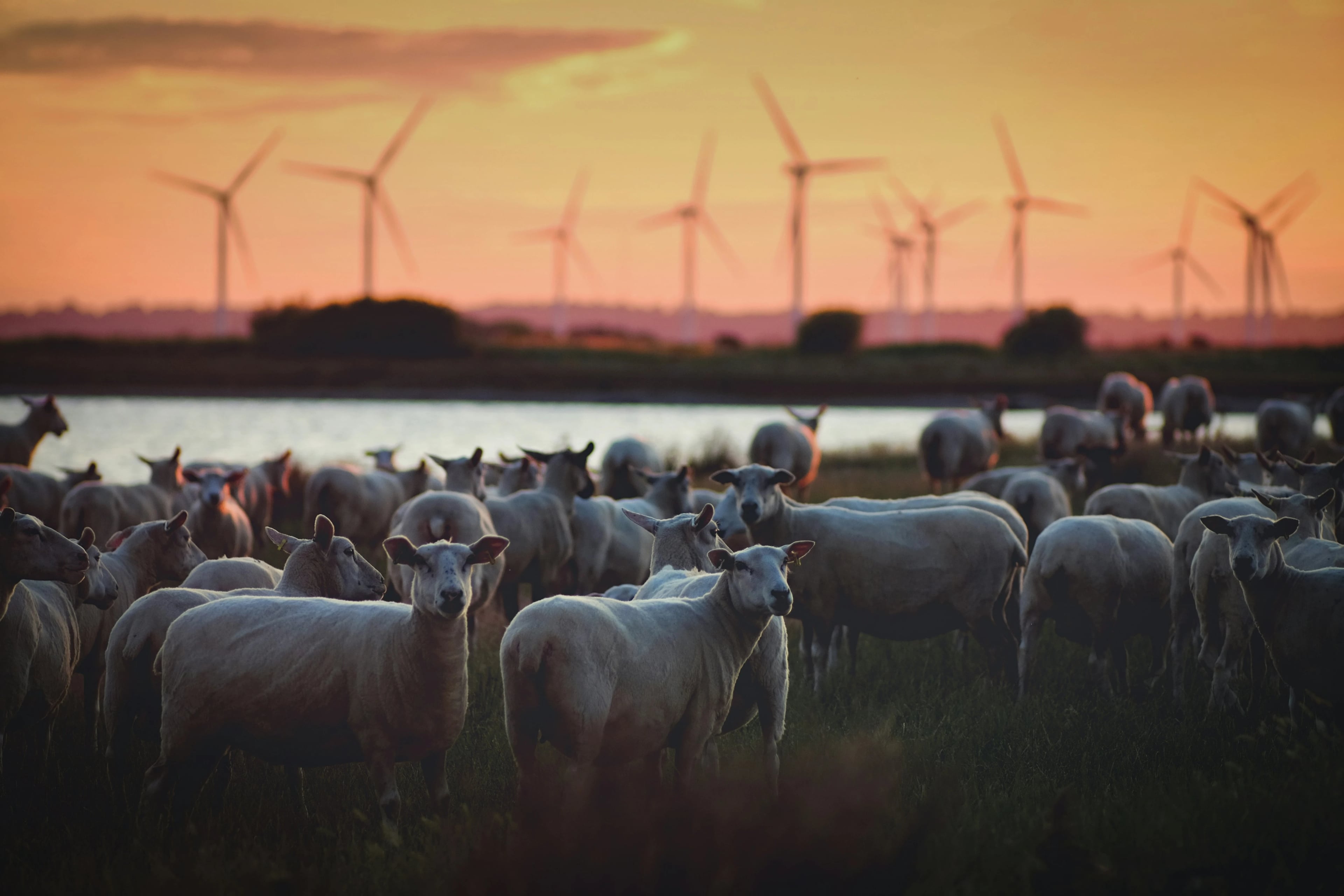
Photo credit: Zoltan Tasi
Find out more about UK planning and community energy
Demystifying the Legal Maze for Community Energy as Pressure Mounts to Abandon Net Zero
The UK government’s Paris Agreement commitment to cut emissions by 68% by 2030 is under more political pressure than ever. As Westminster faces intensifying calls to dilute or abandon its net-zero targets entirely, the survival of the UK's climate strategy hinges heavily on one critical task: rapidly decarbonising the electricity system.
Nonetheless, it has been recorded by the Cornwall Insight's Renewables Pipeline Tracker that between 2018 and 2023, 63% of new renewable energy schemes were either abandoned, refused, withdrawn, or ultimately expired. This alone illustrates the conundrum that whilst the UK commits nationally to reducing the effect of climate change, locally these ambitions remain mired in a pile of paper.
This failure to act does not stem from a lack of governmental will but rather from a fragmented governance and bureaucratic red tape. The potential of local communities owning their own generation of clean renewable energy alleviates the multi-faceted UK energy crisis bringing both community capital and community support into green projects at once.
Community Renewable Energy Schemes (CRE) alleviate the burden of the energy crisis on the local community as instead of a flow of exorbitant sums of money to a distant development company, CRE's form an internalised loop of benefits and profits for the community. Secondly, a CRE system can ensure price stability, as local energy prices can be insulated against global price shocks. However these communities urgently need Great British Energy support to build more and keep the benefits local.
Reclaiming Agency in the Energy Crisis
Baden & Stroup (2026) argue that as governments grow, the expansion of unelected administrative bodies diminishes the power of elections. Unelected bodies are not directly accountable to voters; instead, when public blame is addressed, there is less government accountability but misdirection towards administrative mismanagement. Thus, often the environmental decision makers bear none of the consequences of their actions and can distance themselves from the effects.
Formation of CREs flips this situation as the very people who are affected by government environmental decisions hold the power to make a positive impact on the environment and their local energy sector.
82% of local authorities in England & Wales have declared a climate emergency.
Now, 1 in 6 local authorities are taking action with a Local Area Energy Plan.
The Local Power Plan clearly illustrates that the barrier to UK locally owned clean energy is not due to a lack of will, as this plan itself is documented evidence of a national drive for CRE. The plan states that there is an impressive £1 billion worth of funding from Great British Energy available for supporting over 1000 community energy projects. However, this is only a pledge, the funding hasn't materialised and while the issue of energy security is further politicised new barriers are being erected much faster than community owned wind turbines get approved.
The national will for CREs alone has been historically insufficient to overcome entrenched bureaucratic hurdles. CREs represented just under 0.4% of the UK's renewable energy capacity by 2014 (Harnmeijer, 2016). The primary barrier to establishing or expanding a Community Renewable Energy project stems from a fragmented form of governance and a piecemeal legislative structure.
Nobody does bureaucracy quite like the UK
The UK government has seen a shift towards a New Public Governance paradigm; this framework aims for pluralism and shared goals across the government, private sectors, and civil society. Pluralistic governance in theory means collective collaboration in addressing complex societal issues. However, this shift has inadvertently formed a decentred system (Baden & Stroup, 2026). Instead of collaboration, there is now huge division and complexity across governmental departments and councils.
Between 2015–2024 in England there was practically a de facto ban on onshore wind due to policy misalignment between two government departments. The National Planning Policy Framework (NPPF) contradicted the British Energy Security Strategy ambitions of ensuring onshore wind has the same opportunities for expansion in the UK market. This is because the NPPF only allowed onshore wind to receive planning permission if their proposed project area fit into the local Council plans' allocated area for wind turbines and had received zero local objections.
This resulted in local councils failing to harbour onshore wind development, as they either did not allocate any area for this renewable development or offered inadequate space. This huge policy misalignment has been corrected from 2025, but this still proves that the UK government's inability to coordinate has formed serious barriers to investing in large CREs. During this time Scotland, working with different devolved rules approved over 8GW of new onshore wind, distorting the landscape for wind energy across the UK.
Is the UK Planning System still Facing a Bottleneck?
Today the fragmentation of simple collective policies has rendered the planning system the biggest challenge for CREss to overcome. Henry Lewis (2024) argues clearly that the UK planning system has become a "monument to bureaucratic failure." This argument is validated by the National Audit Office, as it has recorded that major development applications now take an average of 39 weeks for approval. This huge delay to development is caused by:
- Planning departments are facing a £182 million shortfall.
- Often Major applications require over 70 different technical documents, some exceeding 1,000 pages each.
- Local council plans often can contradict national policies.
Plain Language vs. Precision: The Inaccessible Nature of the UK Legal System
The UK's constitution is uncodified in its nature; this means it has been developed over centuries with multiple layers of different documents. Unlike codified constitutions, there is no single document which depicts the constitution. This fundamental characteristic of the UK constitution can be seen to have spread to the nature of all legislative documents. This is because you will not find one single matter or issue dealt with in one concise legal document.
Instead, members of renewable energy communities will need to navigate an abundance of legal documents and government policies. For instance, the National Audit Office has stated that developers must navigate over 1,000 pages of national policy and 7,000 pages of guidance. Additionally, even though the UK legal documents have become more accessible, users still struggle to navigate them due to legal jargon, frequent amendments, and the interaction of old European directives. There has always been a debate on the UK balance between precision and plain language in legislative documents. For most community renewable energy projects, hiring a legal expert would be completely unaffordable.
How Orklys Simplifies the Path to Community Owned Renewable Power
Orklys is developing the technology to bridge the gap between navigating legal jargon and ensuring any person from any background can be part of forming a renewable energy community. Through using Orklys' legal agentic AI approach, legal accessibility increases dramatically as the agent will navigate through hundreds of legislative documents and policies to answer all questions and form accurate legal advice all in one place. This results in skipping the legal jargon and reduces the technical overload on the founding members of community energy initiatives.
Throughout this article it has been made clear that between local councils and government departments there can be policy misalignment or tension between local wants and national needs. Orklys is gathering information at the local and national level and will suggest areas which are feasible for installation and would receive the least amount of local objection. It also ensures that these CREs all know their rights before going into the planning application process, as often the local council will try to deviate from national policies and guidelines.
This is because often national policies and even legislation use indeterminate terminology. Over the last 70 years legislation with indeterminate words has been increasingly enacted. Indeterminate language is when the same words can be used in several ways with different meanings. This allows for the legislation to be used with that individual's discretion; instead, it builds meaning through analysis.
When applied to AI, this linguistic ambiguity creates a massive efficiency gap: processing just 10 UK energy related legal documents demands the same computational and analytical capacity as parsing 100 more precise Danish legislative texts and guidelines.
Nonetheless, this can be overcome. Orklys tools will soon decode indeterminate language to ensure community groups are not vulnerable to subjective interpretations.
UK Government at a Crossroads
This disparity between local action and national policies is being resolved and the UK government is streamlining the planning system by beginning to strip away the "red tape". Currently, the government is removing the number of mandatory advisory bodies, enforcing strict 21-day response deadlines, and focusing oversight on essential safety and environmental issues. This is to stop minor bureaucratic objections from blocking development. The UK Renewable Energy Climate is starting to change and GB Energy has been vocal about the critical role of community owned power. However, the further politicisation of green energy is now becoming more of a threat to progress than the grinding of bureaucratic wheels. High profile politicians calling for further exploitation of North Sea oil and gas and simultaneous abandonment of UK commitments to Net Zero and the Paris Agreement is not only committing Geopolitical seppuku on the global stage but also makes no financial sense. Not only is renewable energy the cheapest form of energy, it is also the fastest to install and arguably the only form of energy production communities can own and operate at scale.
If you are a community in the UK looking to navigate the legislative landscape for locally owned renewable energy, reach out to Orklys and support@orklys.com - We have the tools, expertise and data to help you plan sustainably for the future.
Follow us on LinkedIn to stay on top of the latest developments.