An Energy Community Is a Community Owned Business
Built on 180 years of cooperative principles, the most proven model for shared prosperity.
Rooted in Cooperation
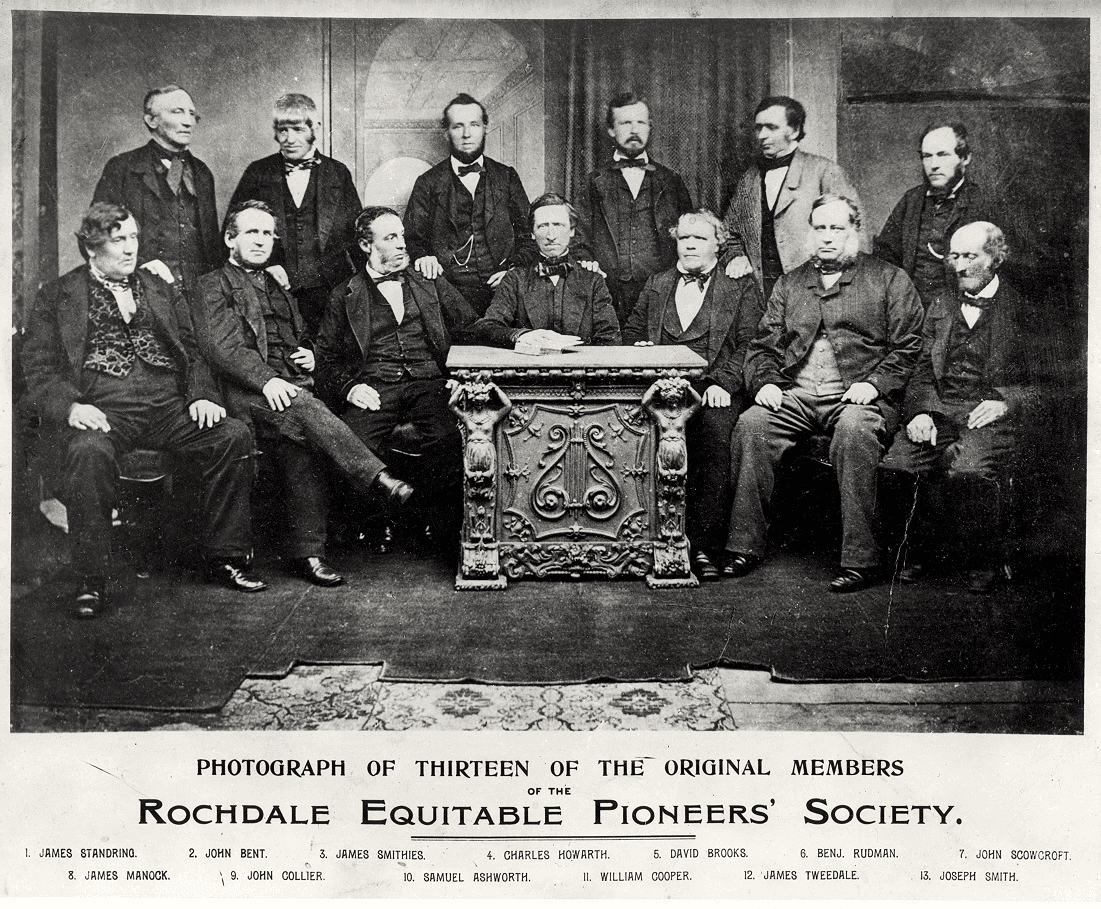
In 1844, the Rochdale Pioneers in England founded the first modern cooperative - not as a charity, but as a business owned by its members. Their principles of democratic control, shared ownership, and community benefit became the blueprint for over 3 million cooperatives worldwide, now generating $2.2 trillion annually and serving 1 billion members.
The Original Win-Win-Win
Energy communities bring this time-tested cooperative model to renewable energy. Members buy shares and share profits. Communities gain energy independence and lower bills. The planet gets cleaner energy, faster. We're not hippies (although hippies are cool), this is about good business with purpose.
A Movement Built Over Centuries
1200s — Ottoman Empire
Early cooperative structures emerge in Anatolian trade guilds, pooling resources for mutual benefit.
1752 — Benjamin Franklin
Franklin founds the Philadelphia Contributionship: America's first mutual insurance company, owned by its policyholders.
1761 — France
The first formal cooperative cheese dairy is established in rural France, letting small farmers compete collectively.
1844 — Rochdale, England
28 weavers open the Rochdale Equitable Pioneers Society codifying the principles that still govern cooperatives today.
1880s — Scandinavia
Denmark, Sweden and Finland build powerful dairy and agricultural cooperatives, transforming rural economies.
2024 — Denmark
Energy communities bring cooperative principles into the green transition: members co-own renewable energy and share the profits.
The Principles That Changed the World
In 1844, the Rochdale Pioneers codified eight principles for fair, democratic business. These principles still govern over 3 million cooperatives worldwide — and they're the foundation of every energy community.
Democratic Control
One member, one vote, regardless of how much capital you invest.
Open Membership
Anyone can join, regardless of gender, social standing, race or political beliefs.
Fixed Interest on Capital
Investors earn a fair return: the cooperative isn't run to maximise shareholder profit it is run to benefit the community, but when profits are made they are shared.
Distribution of Surplus
Profits are shared among members in proportion to their participation, not their capital.
Cash Trading
No credit, no debt traps: transactions are transparent and immediate.
Pure Goods
Products and services must be genuine: honesty is key.
Education
Members are educated about cooperative principles, ensuring informed democratic participation.
Political & Religious Neutrality
The cooperative serves all members equally: not a political or religious agenda.